When Service Excellence Becomes Worker Exploitation
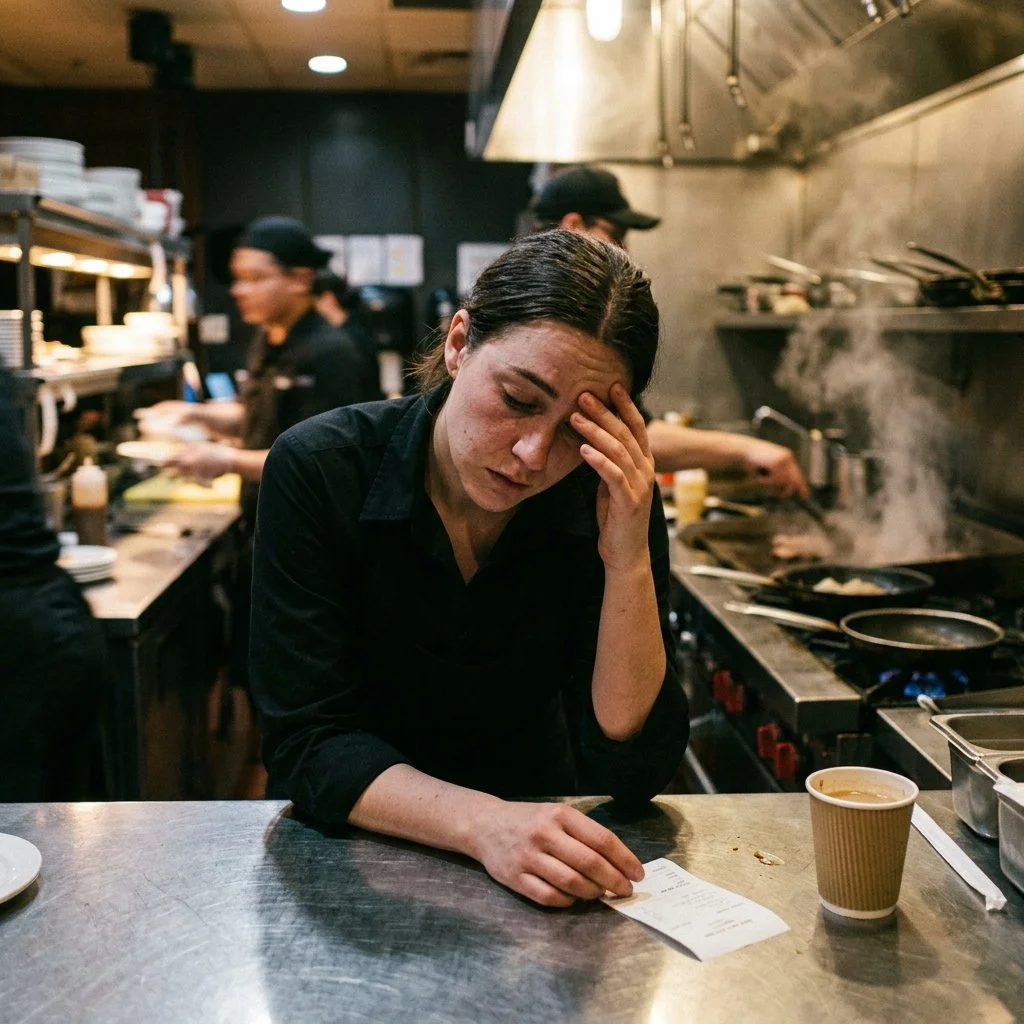
At 1am on a Saturday night, I watched a young waiter clock out after a brutal double shift. She looked grey in the face. She had barely eaten. She had covered three zones because two staff members called out.
The venue owner walked in, glanced at Sunday's brunch roster, and said: "Tell Sophie she needs to be back by 6am. We'll give her a coffee and a croissant."
No one blinked.
That was the culture.
I pulled Steph aside and asked if she was okay with a five-hour turnaround. She smiled politely—because that is what we train them to do—and said, "Of course, I don't want to let anyone down."
That night, I saw it crystal clear: we had trained loyalty so well that self-sacrifice had become the expected currency. And that is exploitation in disguise.
The Cultural Mechanisms That Make Exploitation Feel Normal
When I tell that story, people ask how an owner could demand that. The better question is how everyone else accepted it without question.
The answer lies in five cultural mechanisms that make exploitation feel like dedication.
The Hero Narrative
"She's a weapon." "He just gets on with it." "They'll do whatever it takes."
These phrases glorify overwork and cement identity around self-sacrifice. When you celebrate staff for skipping breaks, working doubles, or pushing through, they internalise that as the bar for worthiness.
It becomes a badge of honour, not a red flag.
The data backs this up. 62% of junior hospitality employees say burnout is just part of the job. When nearly two-thirds of your workforce accepts exhaustion as normal, you have normalised exploitation.
The Gratitude Economy
"You're lucky to be here." "There are 50 people who'd take this job tomorrow."
This mindset flips power upside down. Staff feel indebted for having a role, especially in name venues or tight labour markets. They suppress discomfort or burnout signs because they fear being replaced.
The result? Exploitation masquerades as loyalty and humility.
The Shift Guilt Spiral
"Don't leave us short." "We need you to pull through." "If you don't come in, everyone else suffers."
Team-oriented culture becomes weaponised. Saying no is not seen as setting a boundary. It is seen as abandoning the tribe.
Guilt becomes the scheduling tool.
This is how five-hour turnarounds and 16-hour days become "doing your part."
Absence of HR Infrastructure
Most independent venues do not have a proper HR department. There is no one neutral to mediate, no formal leave or complaint process, no structured burnout monitoring.
Policy becomes personal. If you do not comply, you are not just unavailable. You are not a team player.
Romanticisation of the Struggle
"We're in hospo—it's supposed to be hard." "That's just how it is in the industry."
There is a shared mythology around hardship. The late nights, the double shifts, the calluses and chaos all get wrapped in nostalgia and pride.
People bond over trauma they should have been protected from. This turns dysfunction into identity.
When everyone runs on fumes and fear of letting each other down, no one has time to question if the system itself is the problem.
The Financial Reality of Wage Theft
Let me show you how underpaid staff subsidise the hospitality business model in actual dollars.
Say a section waiter is rostered for eight hours but routinely stays back 60 to 90 minutes to finish reset, help the bar, or support the close. That time is unrostered, unpaid, and uncounted in COGS or wage percentage calculations.
If this happens five times per week, that is six to seven unpaid hours. The equivalent of almost one full extra shift.
At $28 per hour including casual loading, that equals $196 per week per staff member in unpaid labour. That is roughly $10,000 per year per employee in hidden savings.
Multiply that by 10 staff and you get $100,000 per year in free labour padding your bottom line.
My calculation is conservative. Victorian estimates indicate that 79% of hospitality employers did not comply with the national award wage system. Wage theft is the industry norm, not the exception.
The celebrity chef cases prove it. George Calombaris's company underpaid staff by $7.8 million. Shannon Bennett's Vue de monde was accused of forcing staff to work up to 30 hours of unpaid overtime each week. Neil Perry's Rockpool Dining Group faced accusations of timesheet tampering potentially worth up to $10 million.
The Turnover Death Spiral
When you treat labour as disposable, the training cost transfers to the next hire. Every time someone quits from burnout or underpayment, their replacement spends two to four weeks at reduced productivity. Other team members carry their load through unpaid mentoring and extra duties.
Instead of budgeting for learning and development or onboarding resources, the business relies on existing staff to bridge the gap for free.
The numbers are brutal. Hospitality averages 74% annual turnover, well above other industries at 12% to 15%. The average cost to replace one restaurant employee is $5,864.
For a 50-employee restaurant business running at 70% turnover, invisible costs can quietly exceed $1.5 million annually.
Owners think they are saving on wages. But they are bleeding talent, consistency, reputation, and long-term scalability.
The Power Dynamics Behind "The Customer Is Always Right"
At 11:45am on a Saturday during peak brunch, an 18-year-old floor runner named Emily brought pancakes to a family table. The dad looked at the plate and snapped.
"What the fuck is this? I said NO bananas. Can't you idiots follow a basic instruction?"
He slammed the plate down, startling his kids and making Emily visibly shake. She froze. Guests at nearby tables went silent.
I stepped in before she had to say a word.
"Sir, I understand you're upset. But yelling at my staff like that, especially using profanity, is not acceptable here. I'll take that plate back and get your order remade the way you want it. But if I hear you speak to my team like that again, I'll have to ask you to leave."
He looked stunned. His wife went red. The entire section watched.
He said nothing. I took the plate, remade it myself, and brought it out 10 minutes later. He mumbled a quiet thanks.
What Happened Next
Emily teared up in the staff hallway and said, "Thank you. I didn't know what to do." Two nearby tables praised us for handling it and tipped Emily. The man paid, left, and never returned.
We did not care. We had already won.
The $70 brunch bill was not worth the trauma to a teenage staff member, the ripple effect of silence to the rest of the team, or the guests watching and thinking this place lets that happen.
I told the team afterwards: "We don't train you to take abuse. We train you to deliver excellence. And that means I back you when someone crosses a line."
That became a cultural anchor, a moment they all remembered.
The data supports drawing this line. Nearly half of frontline hospitality managers have had to ask a guest to leave or ban a guest from returning within the last year due to their poor treatment of workers.
The emotional labour this demands is crushing. Research involving over 27,000 participants found that emotional labour was directly linked to emotional exhaustion and strain, with surface acting making individuals feel drained of limited cognitive resources.
The Business Case for Staff-First Culture
Great service should not require self-abandonment. If a system demands burnout to deliver excellence, it is a broken system.
This is not just ethics. It is economics.
Businesses with high turnover experience a 31% decline in repeat customers over a six-month period. For every 10% increase in employee satisfaction, customer satisfaction scores rise by 7%.
Retained employees demonstrate higher productivity, better customer service, and increased sales performance. Long-term employees generate 15% to 25% more revenue than newly hired staff during their first year.
When I stopped glorifying grind culture and started rewarding sustainable excellence, everything changed. We rewrote scheduling policies. We added recovery protocols. We made it clear that saying no to a five-hour turnaround was not letting anyone down.
The results spoke for themselves. Staff stayed longer. Service improved. Guest satisfaction scores went up. Profitability increased.
What You Can Do Differently
Culture is not what you say in the team briefing. It is what you normalise in the roster.
Here is where to start:
Mandate minimum rest periods between shifts. If someone finishes at 1am, they cannot start before 9am. No exceptions.
Pay for all hours worked. If staff stay back to reset, close, or support the team, that time goes on the timesheet. Full stop.
Create neutral reporting channels. Staff need a way to raise concerns about burnout, wage issues, or customer abuse without fear of retaliation.
Stop celebrating martyrdom. Praise efficiency, not overwork. Reward staff who maintain boundaries, not those who sacrifice themselves.
Back your team when customers cross the line. A $70 brunch bill is never worth traumatising an 18-year-old. Draw the line publicly and clearly.
Track turnover costs. Calculate what you are actually losing when staff quit from burnout. Then invest that money in retention instead.
The hospitality industry has normalised exploitation for too long. We have dressed it up as dedication, loyalty, and team spirit.
But 62% of junior employees accepting burnout as normal is not a badge of honour. It is a crisis.
You can deliver exceptional service without breaking your staff. The venues that figure this out will not just survive. They will dominate.
Because the best service comes from people who are rested, valued, and protected.
Not people running on fumes and guilt.
